
Botox
Providing Botox treatments in Oakbrook Terrace, Hinsdale, and surrounding communities.
Botox Treatment Basics
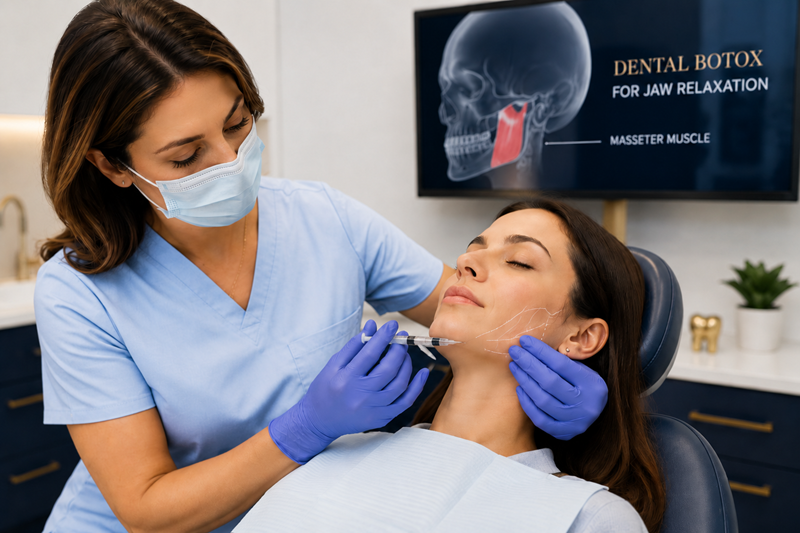 Botulinum toxin, commercially known as Botox, is a neurotoxin that temporarily paralyzes muscles. The treatment can reduce muscle activity when injected into the masseter muscle, mitigating the gripping tension synonymous with temporomandibular joint disorders (TMJ). By hindering the hyperactivity of these powerful masticatory muscles, Xeomin Botox can relieve the intense contractions that contribute to jaw pain, headaches, and even changes to the facial contour caused by an enlarged masseter muscle.
What is Botox?
Botox is produced from a substance called Clostridium botulinum, a type of bacteria. It is safe in controlled amounts for medical and cosmetic use. Botox has been approved for various treatments since 1989 and constantly evolves to improve patient outcomes. It is primarily known for reducing wrinkles by temporarily relaxing facial muscles, yet its therapeutic applications are wide-ranging, including managing muscle contractures and hyperactive disorders.
Safety and Efficacy
Administering Xeomin Botox in the masseter muscle demands a profound understanding of facial anatomy, ensuring patient safety and optimal outcomes. Like any medical treatment, undergoing a procedure involves certain risks, but these are significantly reduced when the procedure is carried out by a qualified professional. Efficacy in relieving TMJ symptoms with Masseter Botox is well-documented.
Beyond alleviating TMJ-related symptoms, Masseter Botox can also lead to aesthetic enhancements by softening the jawline, thus doubling its cosmetic benefit. The effects of Xeomin Botox for TMJ are time-limited, typically lasting for months. Maintenance treatments may be necessary to sustain symptom relief over time.
Ready for a Brighter, More Confident Smile?
Transform your appearance and boost your confidence. The expert team at Awesome Dentistry offers customized cosmetic treatments designed to give you a flawless, natural-looking smile.
Xeomin vs. Traditional Botox
Xeomin and traditional Botox contain botulinum toxin type A, a neuromodulator effective in relaxing hyperactive muscles. However, Xeomin is often called the “naked Botox” because it eschews complexing proteins present in traditional Botox formulations. This distinction may decrease a patient’s likelihood of resistance to the treatment over repeated sessions.
Regarding use for temporomandibular joint (TMJ) disorders, both Xeomin and traditional Botox can alleviate the symptoms by targeting the masseter muscle. However, because Xeomin is more purified, it reduces the risk of an immune response that could make the treatment less effective over time.
Xeomin’s Unique Benefits
As a highly purified neurotoxin, Xeomin presents a unique advantage for TMJ patients requiring masseter muscle treatment. By eliminating accessory proteins, Xeomin reduces the risk of antibody formation, which can lead to treatment resistance, ensuring the longevity of its therapeutic effects.
Furthermore, Xeomin’s composition allows for a more consistent and predictable diffusion within the muscle, which is crucial in managing the nuanced requirements of TMJ treatment.
Masseter Botox for TMJ Relief
The administration of Botox into the masseter muscle presents a proven approach to ameliorating symptoms associated with temporomandibular joint (TMJ) disorders. The effect directly results from Botox’s neuromodulatory action, which induces a state of relaxation in the hypertrophied muscle, consequently decreasing jaw tension and discomfort.
How it Works
- Consultation: A detailed discussion on medical history and TMJ symptoms to tailor treatment plans.
- Assessment: Examination of the jaw to locate the precise points for Xeomin Botox injection.
- Administration: Strategic delivery of Xeomin Botox into the masseter to reduce muscle overactivity.
- Follow-up: Scheduled re-evaluation to monitor the treatment’s effectiveness and discuss further needs.
After treatment, patients may observe reduced jaw pain and tension within days. Continuous muscle relaxation from Xeomin Botox can retrain jaw muscles, lessening the severity of TMJ symptoms over time.
Expected Results and Maintenance
Patients typically experience diminished jaw pain and tension. Following Xeomin administration, most patients notice a softening of the jawline, contributing to a less square facial appearance. Additionally, the targeted muscle relaxation can lead to a notable decrease in TMJ-related headaches, a common disorder symptom.
For sustained relief, re-treatment with Xeomin Botox is usually advised approximately every 3 to 4 months, depending on individual muscle reactivity and the guidance of a healthcare professional.
Are you grappling with TMJ discomfort and seeking a solution that goes beyond temporary fixes? Awesome Dentistry introduces a groundbreaking approach with Masseter Botox, featuring the specialized Xeomin Botox treatment designed to offer you lasting relief.
